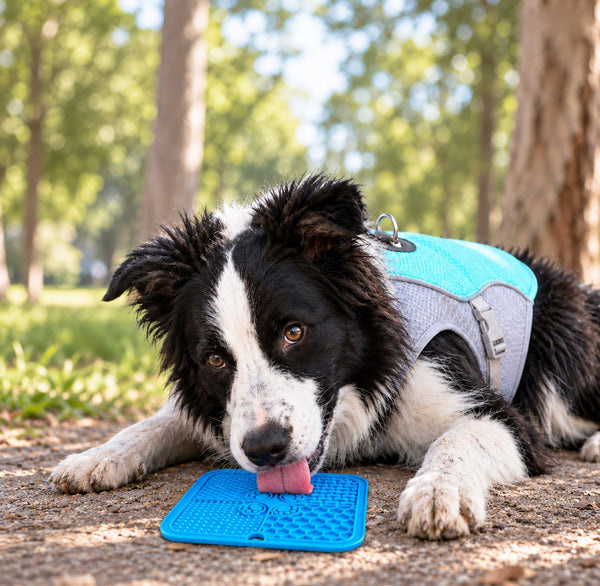
Summers in Australia and New Zealand are not what they used to be. The official data confirms it, and dogs feel it first: they don't sweat like we do and cool down mainly by panting.
What the data says
- Australia has warmed by 1.51 °C on average since 1910, according to the State of the Climate 2024 report from the Bureau of Meteorology (BoM) and CSIRO. Most of that warming has happened since 1950.
- More extreme heat days. In 2019 Australia had around three times as many extreme heat days as any year before 2000.
- 50 °C records. Onslow (Western Australia) reached 50.7 °C in January 2022, equalling the Oodnadatta record (1960). Penrith, in Western Sydney, hit 48.9 °C in January 2020.
- New Zealand is warming too. According to NIWA, 8 of its 10 warmest years on record have happened since 2013, and more hot days are expected, especially in the north of the North Island. Its record is still 42.4 °C in Rangiora (1973).
- Longer fire seasons and more days of extreme fire weather across much of Australia.

Why it matters for your dog
More hot days mean a higher risk of heatstroke, especially for older, overweight or flat-faced dogs. Pavement gets much hotter than the air and can burn paw pads, and a car in the sun turns into an oven within minutes.
How to adapt this summer
- Walk early in the morning or in the evening and avoid the middle of the day.
- Do the 5-second test: press the back of your hand on the ground. If you can't hold it there for 5 seconds, it's too hot for their paws.
- Always carry water and take breaks in the shade.
- Never leave your dog alone in the car, not even with the windows down.
- The Cooling Vest for walks and the Cooling Mat for home and the car help them handle the heat.
- If you notice heavy panting, drooling, weakness or confusion, move them to the shade, cool them with cool (not ice-cold) water and call your vet.
Sources: Bureau of Meteorology and CSIRO (State of the Climate 2024), NIWA (Annual Climate Summary 2024 and temperature records) and RSPCA Australia. The map is illustrative: it shows the records mentioned and approximate heat areas.